Every November, beauty aisles turn into a blur of red banners and "doorbuster" hype. Some of those deals are genuinely the lowest prices of the year. Others are marketing — the same price you'd have gotten in July, dressed up with a countdown timer.
This guide is built for one thing: helping you tell the difference. No deal-hype, no fake urgency — just how Black Friday beauty pricing actually works, which categories are worth your money, and the traps to dodge.
How Black Friday beauty pricing really works
Black Friday deals in beauty come in three flavors:
1. Real markdowns. Retailers discount products they genuinely need to move — last season's shades, gift sets assembled for the holidays, or inventory they're clearing. These are the deals worth chasing.
2. Inflated-then-discounted. The price gets bumped two weeks before Black Friday, then "slashed" back to normal. If a deal looks too dramatic, check the price history (free browser extensions like CamelCamelCamel track this for Amazon-listed items).
3. Exclusive bundles. A brand creates a Black Friday-only set with products you couldn't buy together before. These can be great value — but compare the contents against full-size prices, not the advertised "value."
Knowing which bucket a deal falls into saves you from buying things you wouldn't want at full price either.
The categories that drop hardest
Gift sets
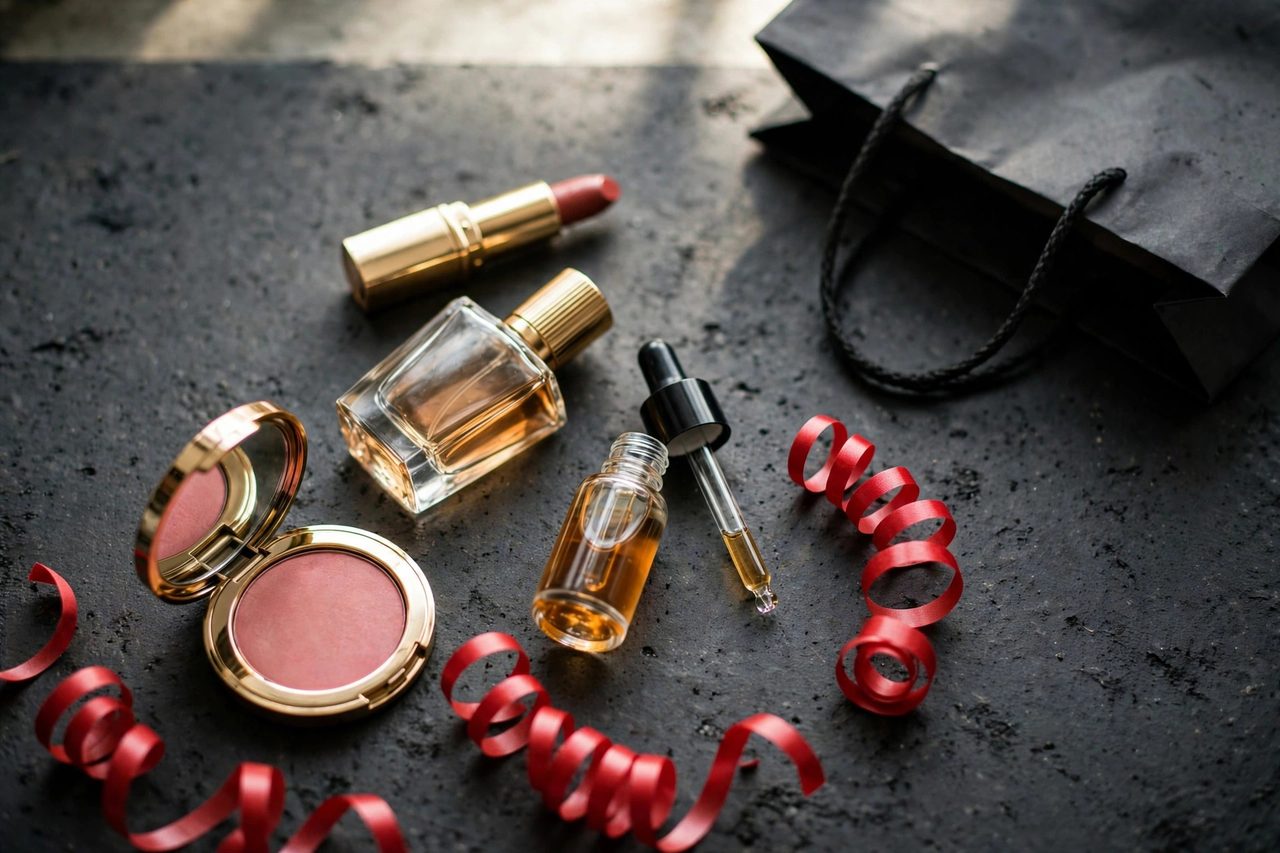
This is Black Friday's undisputed champion category. Brands build limited-edition sets specifically for the holiday season — skincare minis collections, makeup vaults, fragrance duos — and these sell at real discounts because they're volume plays. If you want the best value per dollar on skincare and makeup, start here.
Worth buying: curated sets from brands you already use. You know the products work for you, and the set price usually beats buying the pieces separately.
Skip: sets padded with deluxe samples. A "12-piece set" that contains one full-size product and eleven foil packets isn't a deal.
Premium skincare
High-end skincare rarely goes on deep sale the rest of the year, so Black Friday is genuinely the cheapest time to buy. Expect sitewide sales (often 20–25% off everything) from prestige retailers, plus brand-level events on serums and moisturizers.
Worth buying: the expensive serum or moisturizer you've been eyeing all year. A 25% discount on a $90 product is real money.
Skip: "buy one, get one" on products with short shelf lives. Two bottles of an unstabilized vitamin C serum just means the second one oxidizes before you open it.
Fragrance
Fragrance discounts are some of the most dramatic on paper — and the most manipulated. Prices on big fragrance names bounce around all year, so a "50% off" claim often just matches last month's price somewhere else.
Worth buying: gift sets with a full-size bottle plus a mini or lotion. Compare the bottle size and price per ml against a fragrance-discounter baseline, not the MSRP.
Skip: anything where you can't find the fragrance reviewed or sold anywhere else. Unknown "designer-inspired" perfumes in Black Friday flyers are usually overpriced impostors.
Tools and devices
LED masks, facial devices, hair styling tools — the category that benefits most from Black Friday. These are high-ticket items with real margins to cut, and 30–40% off a $200 device is the kind of saving that actually matters.
Worth buying: devices you've researched and would buy eventually anyway. The sale just moves the timeline.
Skip: devices with no reviews, no brand website, and no warranty information. A $30 LED mask that does nothing is 100% off your money.
Quick-compare: where the real savings are
| Category | Typical discount | Deal honesty | Best tactic |
|---|---|---|---|
| Gift sets | 20–40% vs. separate prices | Mostly honest | Stick to brands you know |
| Premium skincare | 20–25% sitewide | Honest | Stock up on staples |
| Fragrance | 20–50% off MSRP | Often inflated MSRP | Compare price per ml |
| Tools & devices | 30–40% | Honest on name brands | Only buy researched picks |
| Drugstore basics | 10–20% | Usually genuine | Bundle for free-shipping thresholds |
| "Mystery" brands | Up to 70% | Mostly theater | Walk away |
Red flags: when to close the tab
- The price ends before the sale starts. If a "deal" page says the offer expires before Black Friday week, it's pressure, not pricing.
- You can't find the product's normal price. No MSRP, no price history, no reviews anywhere — the "discount" is being computed against a fantasy number.
- Checkout upsells multiply. A deal page that keeps adding "wait, one more thing" offers at checkout is a conversion funnel, not a bargain.
- Everything is 70% off. A store where every single item is dramatically discounted has no real prices — only sale prices. The anchor is fake.
- "As seen on TikTok" without a brand behind it. Viral-format packaging with no identifiable manufacturer is the modern version of a flea-market knockoff.
How to prep like a pro (the week before)
- Make the list now. Write down the exact products you want — brand, product name, shade. Black Friday rewards people with lists and punishes browsers.
- Screenshot current prices. The fastest way to verify a deal is your own photo of last week's price. No extension needed.
- Set your ceiling. Decide your total budget before the sales start. The entire Black Friday machine is designed to make you spend "because it's on sale."
- Check return policies. Sale items sometimes have tighter return windows. Know the policy before you click buy.
- Shop Tuesday–Wednesday before. Many of the best deals actually launch in the days leading up to Friday — the actual day gets the leftovers and the website crashes.
Cyber Monday: the second chance
If Black Friday disappoints you, Cyber Monday is the real play for beauty. Online-first retailers drop their biggest discounts on Monday, and sold-out Black Friday items sometimes get restocked at the same price. Keep your list; the good ones circle back.
How we choose
We only write about deal categories with a track record of genuine discounts — gift sets, prestige skincare, and proven devices — and we skip categories where the "deals" are mostly theater. No sponsored placements, no manufactured urgency: if a deal isn't verifiable, it doesn't make the page. Bookmark this and check back through November; we'll flag any new patterns we spot as the sales roll out.