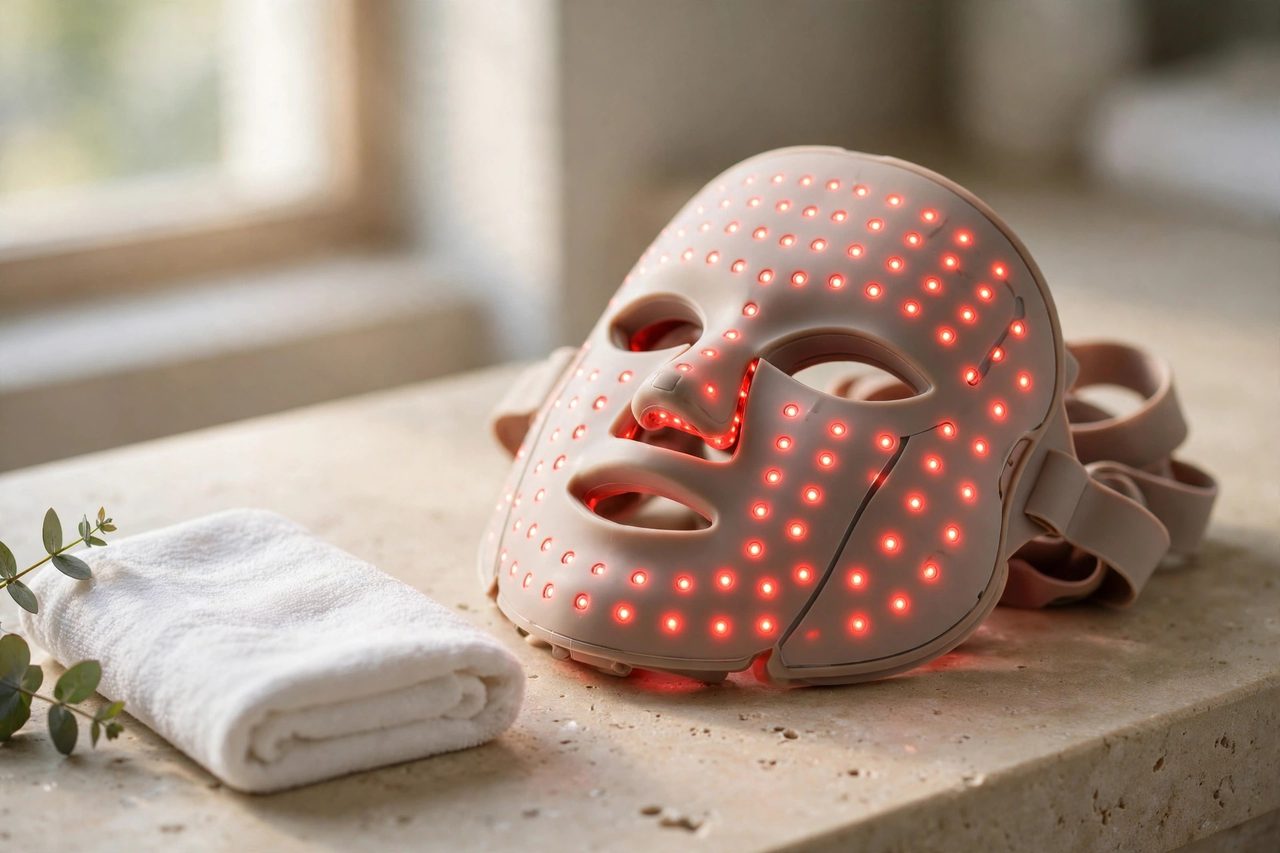
You have seen the photos: a glowing red mask, ten quiet minutes, and the promise of better skin. Red light therapy masks went from dermatology clinics to bathroom counters fast, and the price range is just as dramatic — from budget options to devices that cost more than a used phone. Before you buy one, here is what beginners should actually know.
The short version: these devices shine specific wavelengths of red and near-infrared light onto your face. The idea is that skin cells absorb the light, which may support the skin's normal repair processes. The research is real but still early and mixed — enough to be interesting, not enough to promise miracles. This guide is about making a smart purchase, not selling you one.
How red light therapy masks work
Most at-home masks use two types of light:
- Red light (roughly 630–660nm): the visible red glow you see in photos. Studied for general skin-appearance concerns like dullness and uneven tone.
- Near-infrared light (roughly 830–850nm): invisible to the eye, meant to reach slightly deeper. Marketed for firmness and fine lines.
Sessions are typically 10–20 minutes, a few times a week, over several weeks before anyone claims to see a difference. Nothing about this is instant — consistency is the whole game. And an important caveat: clinical studies mostly test higher-powered professional devices, so at-home results are likely to be subtler than anything you see in a before-and-after ad.
What beginners should know first
Set realistic expectations. A mask will not replace sunscreen, a good moisturizer, or a consistent routine. If your skin barrier is unhappy, fix that first — a solid winter moisturizer routine does more for most people than any gadget.
Safety basics matter. Do not stare directly into the LEDs. Most masks have eye cutouts, but if the light bothers your eyes, the session is too bright or the fit is wrong. Skip use over broken skin, rashes, or active irritation, and be cautious if you take medications that cause light sensitivity — check with a doctor or dermatologist first. If you are pregnant or nursing, ask your clinician before starting; there is not enough data to assume it is fine.
"FDA-cleared" is not "FDA-approved." Many devices are FDA-cleared, which means the device is considered safe and substantially similar to an existing one — it is not an endorsement that it works for wrinkles or acne. Treat it as a safety floor, not a quality ranking.
Actives still need care. If you use retinol, acids, or strong vitamin C, use them at a different time than your mask session — light therapy goes on clean, product-free skin. The correct layering order still applies to everything else in your routine.
The main types of masks (and what they cost)
At-home masks fall into a few design families. Here is how they compare:
| Type | What it is | Typical price | Best for | Trade-off |
|---|---|---|---|---|
| Rigid full-face mask | Hard plastic shell, straps or handles, plug-in or battery | $150–$500+ | Dedicated sessions at home | Bulky; you are tethered to one spot |
| Flexible silicone mask | Soft, bends to your face, usually cordless | $200–$600 | Comfort, multitasking during sessions | Higher price for the convenience |
| Targeted panel / spot device | Small handheld or wearable patch for one area | $50–$200 | Trying the concept cheaply | Does not cover the whole face |
| Neck-and-face combo | Extends coverage below the jawline | $250–$600 | People who want neck coverage too | Heavier, longer sessions |
Price does not track effectiveness in any simple way. A mid-range mask with clearly published specs (wavelengths, number of LEDs, session timer, auto shut-off) is usually a smarter buy than a mysterious premium device with a celebrity face on the box.
How to use one safely
1. Start with clean, dry skin. Remove makeup and sunscreen first — product layers block light.
2. Follow the device's session length. Usually 10–20 minutes. More is not better; longer sessions do not multiply results.
3. Use it 3–5 times a week. Most routines suggest consistency for 8–12 weeks before judging.
4. Moisturize after. Your normal skincare layering order applies — light session first, then serums and moisturizer.
5. Do not combine with strong actives in the same session. If you are new to retinol, keep it on alternate nights.
Red flags when shopping
- Miracle language. "Melts fat," "erases 20 years," "works in 3 days" — run. No credible device promises this.
- No published specs. A legitimate mask lists its wavelengths (in nm), LED count, and session time. If the listing only shows a glowing model, skip it.
- Suspiciously cheap no-name listings. Underpowered LEDs in a flimsy shell are the most common disappointment in this category.
- "One session fixes everything" reviews. Real users report subtle, gradual changes over weeks — instant transformations are filters or fiction.
- No safety certification mentioned. Look for FDA clearance or equivalent regulatory marking, plus an automatic shut-off timer.
The honest bottom line
A red light therapy mask is a long-game device for people who already have a solid basic routine and want to experiment. It is not a shortcut, it is not a medical treatment, and it will not outperform the boring fundamentals: gentle cleanser, moisturizer, sunscreen. If you buy one, buy for the specs and the safety basics, use it consistently for two to three months, and judge it by your own mirror — not by an influencer's ring light.
How we choose
We evaluate devices on published specifications, not marketing: disclosed wavelengths, LED count, session controls, safety certifications, and realistic usage guidance. We do not accept sponsored placements, we do not link to retailers, and we never promise results the evidence cannot support. When the research is early, we say so.