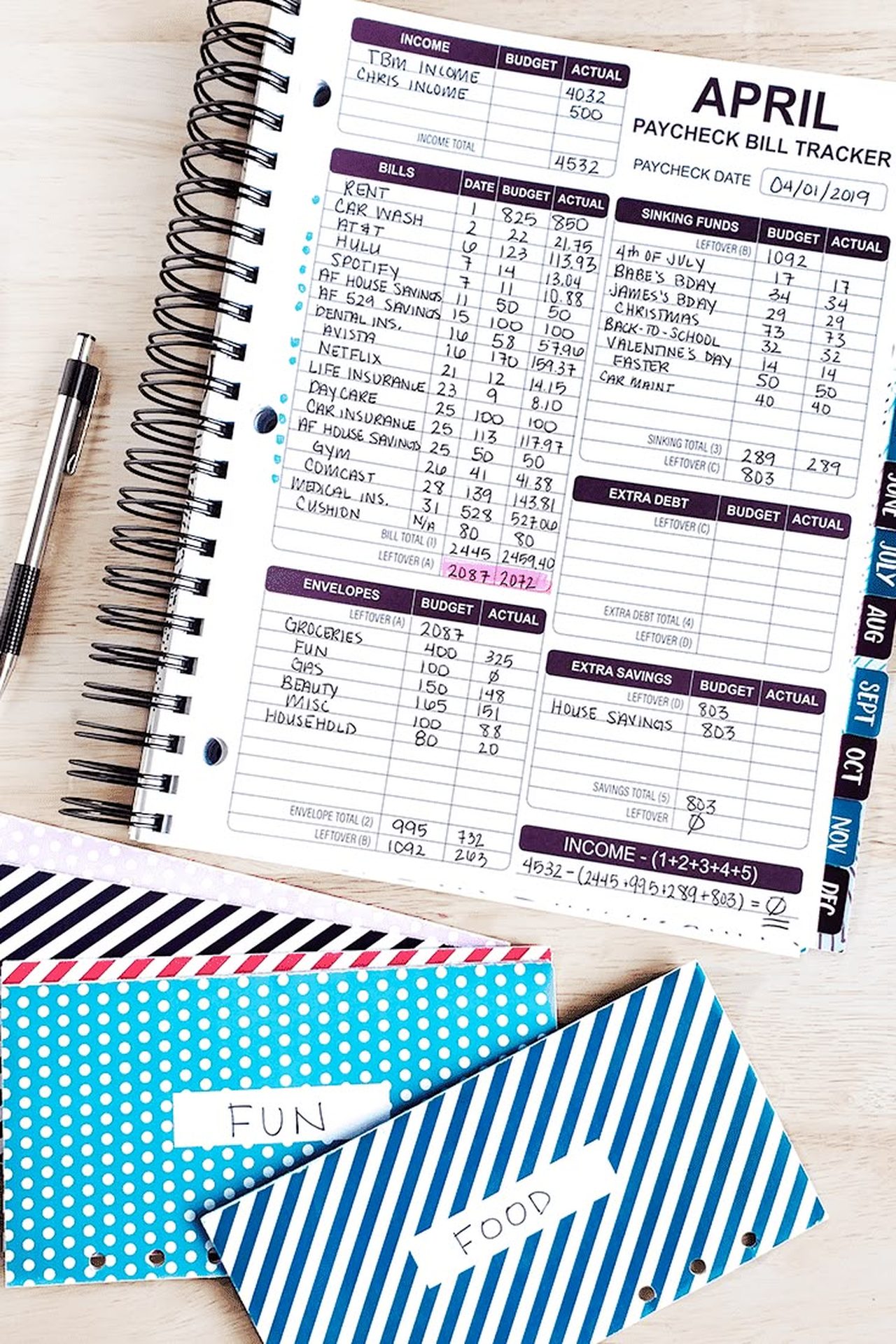
Budgeting on minimum wage is a different job from budgeting on a comfortable salary. Most budgeting advice assumes you have money left over after the basics — a nice problem to have, but not the reality when your whole paycheque barely covers rent, food, and getting to work. If the classic 50/30/20 rule has ever made you feel like you're failing at money, the rule is the problem, not you. When rent alone can eat half your income, a system built for a middle-class salary simply doesn't fit.
This guide describes a simple system that does fit: cover the essentials first, plan one paycheque at a time, and give every dollar a job before the month starts. It won't magically make a small income big. What it can do is stop the money leaking away unnoticed, keep the bills paid on time, and build a small buffer — even a $10 one — that turns the next emergency from a crisis into an inconvenience.
Why the usual percentages don't work
The most-quoted budgeting method, the 50/30/20 rule, splits your take-home pay into 50% needs, 30% wants, and 20% savings. On a minimum-wage income, that split is often impossible. If you earn around $1,200 a month after tax and your rent is $650, housing alone is already 54% of your pay — before food, transport, or a phone bill. Trying to force your spending into those percentages just produces a budget you can't keep, and a budget you can't keep gets abandoned by week two.
The system below flips the order. Instead of starting with percentages, it starts with what must be paid, then works with what's actually left. The numbers are smaller and the progress is slower, but the plan survives contact with real life — and a plan you can actually follow beats a perfect plan you quit.
Step 1: Work out your real take-home pay
Budgeting starts with the money that actually lands in your account, not the number on your pay rate. If you earn the US federal minimum wage of $7.25 an hour and work 40 hours a week, your gross pay is about $1,257 a month — but after tax withholding, what reaches your bank account is usually closer to $1,100–$1,200, depending on your state and withholding.
If your hours vary week to week, don't budget on your best month. Look at your last three pay slips, add up the take-home pay, and divide by three. That average is your planning number. In a good month, the extra is a bonus you can save; in a bad month, your budget still works because it was built on the average, not the hope.
If you're paid weekly, there's a quiet bonus built into the calendar: most months have four paydays, but four months a year have five. Treat that fifth paycheque as a windfall — send it straight to savings or use it to get one bill ahead — instead of letting it disappear into everyday spending.
Step 2: Cover the four walls first
Before anything else, your budget has to cover what keeps your life standing: food, utilities, shelter, and transport. Financial educators often call these the "four walls", and the name is the point — everything else is negotiable, these aren't.
- Shelter: rent, plus any required renter's insurance.
- Utilities: electricity, water, heating, and your phone — the phone counts, because it's how you get shifts and stay reachable for work.
- Food: groceries for home cooking, not takeaway or delivery.
- Transport: bus fare, fuel, or whatever gets you to work reliably.
Write down the real cost of each one from your last month's bank statement, not a guess. Most people underestimate food and transport by 20–30% when they guess, which is exactly how a budget quietly falls apart. If the four walls add up to more than your take-home pay, skip ahead to the section below on what to do when the numbers don't add up — that's a math problem to solve, not a personal failure.
Step 3: See it on paper — a $1,200-a-month example
Here's what the system looks like with a $1,200 monthly take-home pay — roughly a full-time federal minimum-wage job after tax. Your numbers will differ, but the order stays the same: four walls first, a small amount to savings, then everything else.
| Category | Amount | Share of pay |
|---|---|---|
| Rent | $600 | 50% |
| Groceries | $220 | 18% |
| Utilities (electric, water, phone) | $140 | 12% |
| Transport (bus pass / fuel) | $80 | 7% |
| Four walls total | $1,040 | 87% |
| Savings (even a small amount) | $25 | 2% |
| Personal & household | $60 | 5% |
| Fun money | $40 | 3% |
| Buffer for irregular costs | $35 | 3% |
| Total | $1,200 | 100% |
Two things worth noticing. First, the savings line is only $25 — deliberately small. On a tight income, a $25 habit you actually keep beats a $100 target you abandon in week one. After three months, that $25 has quietly become $75, and you can raise it when your pay or your costs change. Second, there is a fun-money line, even if it's only $40. A budget with zero room for anything enjoyable is a budget you'll break — planned small treats are cheaper than a frustrated blowout spend.
Step 4: Give the flexible spending a container
Fixed bills can be handled by direct debit or by paying them the day you're paid. The money that usually leaks away is the flexible spending — groceries, personal items, and fun money. The oldest trick for controlling it is still one of the best: the cash envelope system.
Each payday, withdraw the cash for your flexible categories and put each amount in its own envelope — one for groceries, one for personal items, one for fun. When an envelope is empty, spending in that category stops until the next payday. It sounds old-fashioned because it is, but it works for a simple reason: a shrinking stack of physical notes is much harder to ignore than a card balance you never look at.
If carrying cash doesn't suit you, the same idea works with separate bank accounts or a budgeting app that splits your money into digital envelopes. The container doesn't matter — the rule does: when a category is empty, it's empty. Our guide to cash stuffing for beginners walks through the envelope setup in detail.
Step 5: The ten-minute weekly check-in
A monthly budget fails because a month is too long to stay focused. A weekly check-in fixes that. Pick one evening a week — Sunday works for most people — and spend ten minutes on three questions:
1. What did I spend this week? A quick look at your bank app or your envelopes.
2. Is anything about to run out? Groceries, transport money, a bill due before payday.
3. Does anything need to move? If groceries ran over, take the difference from fun money — this week, not next month.
That's it. Ten minutes a week catches a $30 overspend while it's still a $30 problem. Left until the end of the month, the same overspend becomes a shortfall you only discover when a bill bounces.
Where to find extra room
When the budget is tight, the biggest wins usually come from a few regular costs rather than from skipping the occasional coffee. Here's how the common swaps compare:
| Swap | Typical monthly saving | Effort |
|---|---|---|
| Cook at home instead of takeaway 3x a week | $60–$120 | Medium — needs a simple meal routine |
| Switch to a cheaper phone plan | $15–$40 | Low — one phone call |
| Cancel one streaming service you barely use | $10–$16 | Low — two minutes |
| Buy store-brand groceries | $25–$50 | Low — same shop, different labels |
| Pack lunch for work instead of buying it | $40–$80 | Medium — needs a lunch routine |
| Use the library instead of buying books or films | $10–$30 | Low |
None of these is life-changing on its own. Together, though, two or three of them can free up $50–$100 a month — which on a minimum-wage income is the difference between a budget that balances and one that doesn't. Start with the low-effort ones first; the habit sticks better when the win comes quickly.
What to do when the numbers don't add up
Sometimes the honest answer is that the four walls cost more than the paycheque covers, and no amount of clever budgeting fixes that. If that's your situation, the problem is income and costs, not willpower — and there are practical steps that can help:
- Check what support you're eligible for. In the US, programs like SNAP (food assistance) and LIHEAP (help with heating and energy bills) exist specifically for low-income households. You can check what's available in your state at benefits.gov, and local food banks can bridge a gap week with no paperwork at all.
- Ask about your bills. Many utility companies and phone providers have hardship or low-income plans they don't advertise. A five-minute call asking "do you have a lower-cost plan?" can cut a bill by $10–$30 a month.
- Look at the income side. A small increase in hours, a shift differential for nights or weekends, or a short-term side hustle can add $100–$200 a month — which, on this budget, is transformative. Our guide to side hustles for beginners lists options that need no experience and cost nothing to start.
- Talk to a free counsellor, not a paid one. The US Consumer Financial Protection Bureau lists free, verified financial counselling services at consumerfinance.gov. Never pay a company that promises to fix your debts for a fee — legitimate help is free.
Mistakes that quietly break a minimum-wage budget
- Budgeting on gross pay instead of take-home pay. The taxman takes their share first; your budget has to start after that.
- Forgetting irregular costs. Car repairs, a birthday gift, new work shoes — they happen every month to someone. The $35 buffer line in the example exists for exactly this.
- Using credit to cover a gap in the budget. If the budget only balances because a card covers the shortfall, the shortfall is growing, not solved. That's the moment to revisit the numbers, not the credit limit.
- Trying to fix everything in week one. Change one thing — cook three more dinners at home, or switch the phone plan — and let it stick before adding the next change.
- Hiding from the numbers. Checking your balance feels worse than not checking it, but the balance is the same either way. The weekly check-in is how you stay in charge of it.
Your first month, week by week
Week 1: Add up your last three months of take-home pay and take the average. List your four walls from your bank statement. Pay the fixed bills the day you're paid.
Week 2: Set up your envelopes — cash or digital — for groceries, personal items, and fun money. Move your small savings amount out of reach the moment you're paid, even if it's only $10 or $25.
Week 3: Do your first ten-minute check-in. Move money between categories if you need to — that's the system working, not failing.
Week 4: Compare the month against your plan. Keep the categories that worked, adjust the ones that didn't, and carry any leftover forward. Then repeat — a budget gets easier every month you keep it, because the numbers stop being guesses and start being yours.
Budgeting on minimum wage isn't about discipline or cleverness. It's about having a system that respects the reality of a small income: essentials first, small savings that actually happen, and a weekly check-in that catches problems while they're still small. Start with this month's paycheque, keep it simple, and let the habit do the heavy lifting.