You know the feeling. You went to the shop for one thing and came home with four. Or you opened your phone to check the weather and somehow bought a lamp. Impulse buying is rarely a character flaw — it's a design feature. Shops, apps, and advertisers spend billions making it as easy as possible to buy things you didn't plan to buy.
The good news: you don't need more willpower to beat it. You need better systems. The tricks below work by adding small amounts of friction between the urge and the purchase, and by making the real cost of a buy visible before you commit. Pick three or four that fit your life, try them for a month, and see what changes.
First, understand what an impulse buy actually is
An impulse buy is any purchase you didn't plan before you saw the item — bought in the moment, on emotion, without checking whether it fits your budget. Research on consumer behaviour suggests that roughly 40–60% of in-store purchases are unplanned, and online the rate is pushed even higher by one-click checkout and free-shipping thresholds.
Most impulse buys start with one of four triggers: boredom, stress, a sale, or social media. The purchase is just the fastest way to scratch the itch. That matters, because it means the fix isn't "try harder" — it's spotting the trigger and interrupting the pattern before money leaves your account.
The waiting rules — your strongest defence
1. The 48-hour rule. Want something that isn't on your list? Write it down and wait 48 hours before deciding. That's it. This single rule kills most impulse purchases, because most urges fade within a day or two. If you still want the item after the wait — and it fits your budget — buy it without guilt.
2. Scale the wait to the price. A flat 48 hours works for everyday items, but bigger purchases deserve a longer pause. A useful scale: under $25, wait 24 hours; $25 to $100, wait 72 hours; over $100, wait 30 days. The bigger the price, the more the delay protects you.
3. The photo test. See something you want in a shop? Take a photo of it and walk away. If you're still thinking about it in a week, go back. Most of the time you never go back — and the photo gave your brain the "capture" satisfaction without the cost.
4. Keep a wish list, not a cart. When you spot something online, save it to a wish list instead of adding it to your cart. A cart feels like a purchase in progress; a wish list feels like a note to your future self. Review the list once a month and you'll be surprised how many items you no longer want.
Make buying harder on purpose
5. Delete shopping apps from your phone. Apps are engineered to make buying effortless — saved payment details, one-tap checkout, push notifications about sales. Deleting them doesn't stop you shopping; it just means you have to open a browser and log in, and that small effort is often enough to break the autopilot.
6. Remove saved payment details. Having to type your card number in by hand for every purchase creates just enough friction to interrupt an impulse. Do this on the shops where you buy most often, and turn off one-click ordering wherever it's offered.
7. Unsubscribe from marketing emails. Every sale email is a trigger delivered to your inbox. Unsubscribe from the shops that tempt you most — not all of them, just the worst offenders. The unsubscribe link is at the bottom of every email, and it takes about ten seconds.
8. Turn off sale notifications. Push notifications about flash sales and "only 2 left!" messages are designed to create urgency that isn't real. Turn off notifications from shopping apps entirely. If a sale is genuine, it will still be there tomorrow.
Shop with a system, not a mood
9. Shop with a list — always, everywhere. Going to the shops for paper towels? The list says: paper towels. A specific list is one of the most effective tools against impulse buying, because it turns every unlisted item into a decision instead of a reflex. The same applies online: search for the exact item you need instead of browsing a category.
10. Set a "fun money" amount. A budget that allows zero fun spending always fails. Give yourself a fixed monthly amount for unplanned treats — say $30 or $50 — and spend it however you like, no guilt attached. Once it's gone, it's gone until next month. Planned treats replace unplanned ones, and the budget survives.
11. The one-in, one-out rule. For categories where you already own plenty — clothes, mugs, cables, skincare, books — set a rule: nothing new comes in unless something old goes out. It forces a real decision ("do I want this enough to give something up?") instead of a thoughtless addition.
12. Calculate the cost per use. Don't judge an item by its price tag — judge it by how often you'll actually use it. Divide the price by the number of times you realistically expect to use it. A $120 jacket you'll wear 60 times costs $2 per wear. A $40 gadget you'll use twice costs $20 per use. The second one is the expensive item.
Track it and learn from it
13. Track every unplanned purchase for a month. For one month, write down every purchase you didn't plan — what it was, what it cost, and what triggered it. Most people are shocked by the total. More importantly, you'll see your own pattern: the same shop, the same time of day, the same emotional trigger. Once you can see the pattern, you can change it.
14. Do a no-spend challenge. Pick a week — or a month, if you're feeling brave — where you buy only essentials: groceries, transport, bills. Everything else waits. A no-spend stretch resets your sense of what "normal" spending looks like, and many people find that the urge to buy weakens noticeably after just a few days.
15. Ask yourself three questions before every unplanned purchase. Before you buy anything that wasn't on your list, pause and answer three questions: Do I need this, or do I just want it right now? Where will I put it, and when will I use it? What am I giving up to buy it? One honest sentence is often enough — a surprising number of impulse buys can't survive the question "why do I actually want this?"
What impulse buying really costs
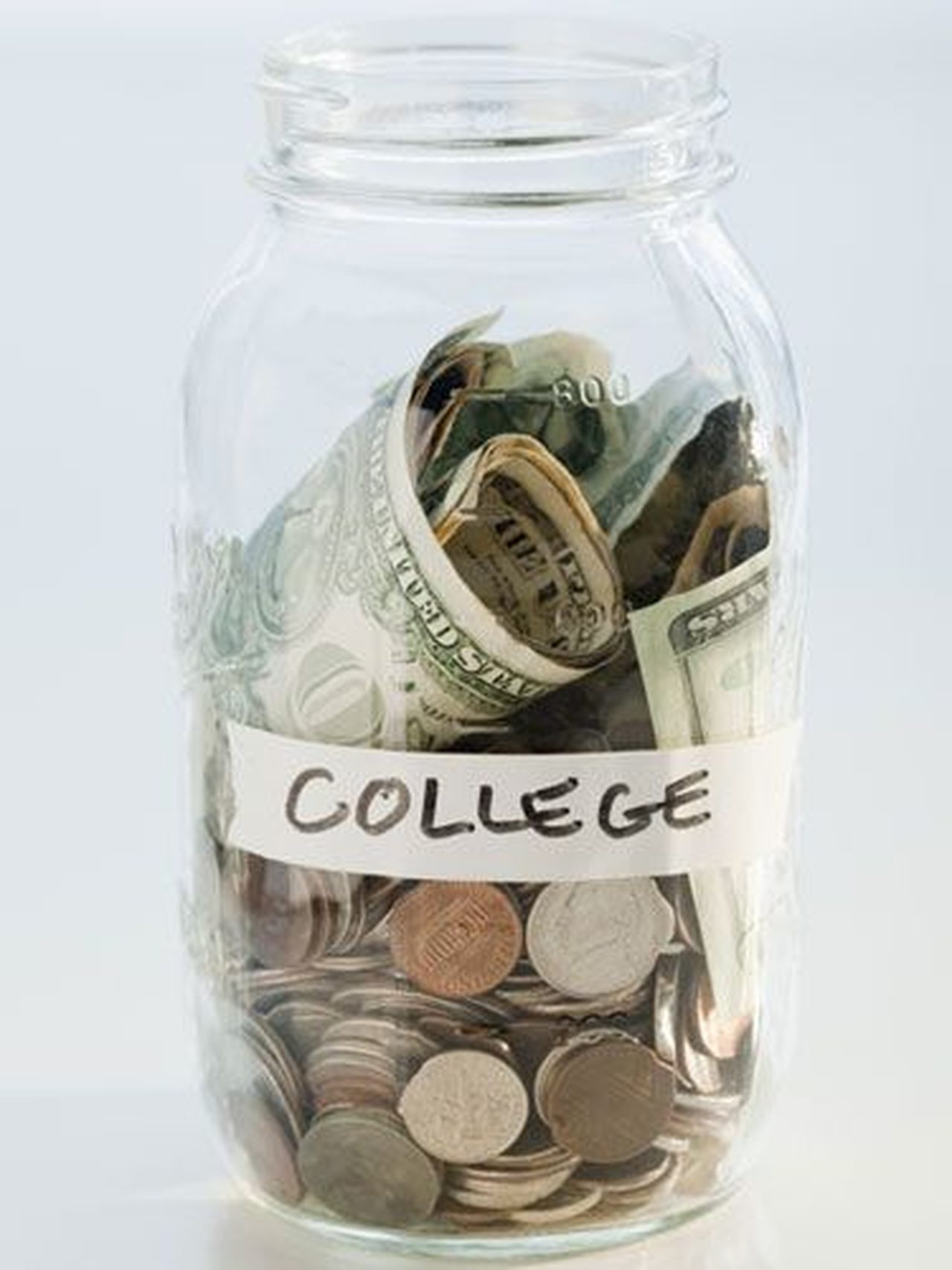
The numbers add up faster than most people expect. Industry data has put the average American's impulse spending at around $250 a month — roughly $3,000 a year. That's not a judgement; it's a useful frame. If even half of that spending was unplanned, a few of the tricks above could redirect well over $1,000 a year toward savings, debt, or something you genuinely care about — without you feeling deprived.
| Trick | Best for | Effort to start |
|---|---|---|
| 48-hour rule | Almost every impulse buy | Low — just a note on your phone |
| Delete shopping apps | Online impulse buys | Low — a few minutes |
| Remove saved payment details | One-click checkouts | Low — a few minutes per shop |
| Shop with a list | In-store impulse buys | Low — write it before you go |
| Fun money amount | Guilt-free treats | Medium — needs a budget |
| Track unplanned purchases | Finding your pattern | Medium — daily notes for a month |
| No-spend challenge | Resetting habits | Medium — takes commitment |
| Cost per use | Expensive items | Low — quick maths in your head |
When spending feels out of control
These tricks work for ordinary impulse buying — the everyday drift of unplanned purchases. But if spending feels compulsive, causes real financial harm, or you feel unable to stop even when you want to, that's a different situation, and willpower tricks aren't the answer. Talk to a qualified professional or a free financial counsellor — in the US, the Consumer Financial Protection Bureau lists free and low-cost counselling resources, and in Australia, the National Debt Helpline (1800 007 007) offers free, confidential help. There's no shame in it; it's the practical next step.
Start with three
Don't try all fifteen tricks at once — that never sticks. Pick the three that fit your biggest weakness. If your problem is online shopping, start with the 48-hour rule, deleting shopping apps, and removing saved payment details. If it's the shops, start with the list, the photo test, and the one-in, one-out rule. Try them for a month, check what changed, and keep the ones that work.
Impulse buying is engineered by professionals. Beating it with systems — waiting rules, wish lists, removed triggers — isn't a failure of willpower. It's the sensible response to a game that was never designed for you to win.